Why Hire a Professional AC Repair Company in Utah County?
When your air conditioner stops keeping up during a Utah summer, the fastest-looking fix is not always the right fix. A tripped breaker, dirty filter, weak capacitor, airflow restriction, refrigerant issue, or failing motor can produce similar symptoms. A professional diagnosis separates the cause from the symptom so you can approve the right repair instead of paying for guesswork. If your home is already uncomfortable, Larsen Heating & Air provides professional AC repair in Saratoga Springs and throughout Utah County, with same-day availability for many calls, upfront pricing, and no-pressure recommendations.
Hiring a qualified AC repair company is about more than convenience. It protects your equipment, helps keep electrical and refrigerant work safe, and gives you better information when deciding whether to repair the system or consider replacement. Here is what a professional should bring to the service call—and what you should expect before any work begins.
Why Professional AC Diagnosis Matters
Air-conditioning problems overlap. Warm rooms do not automatically mean the system needs refrigerant, and an outdoor unit that will not start does not automatically mean the compressor has failed. The thermostat, electrical controls, airflow, indoor coil, outdoor coil, blower, condensate system, ductwork, and refrigerant circuit all affect how the system performs.
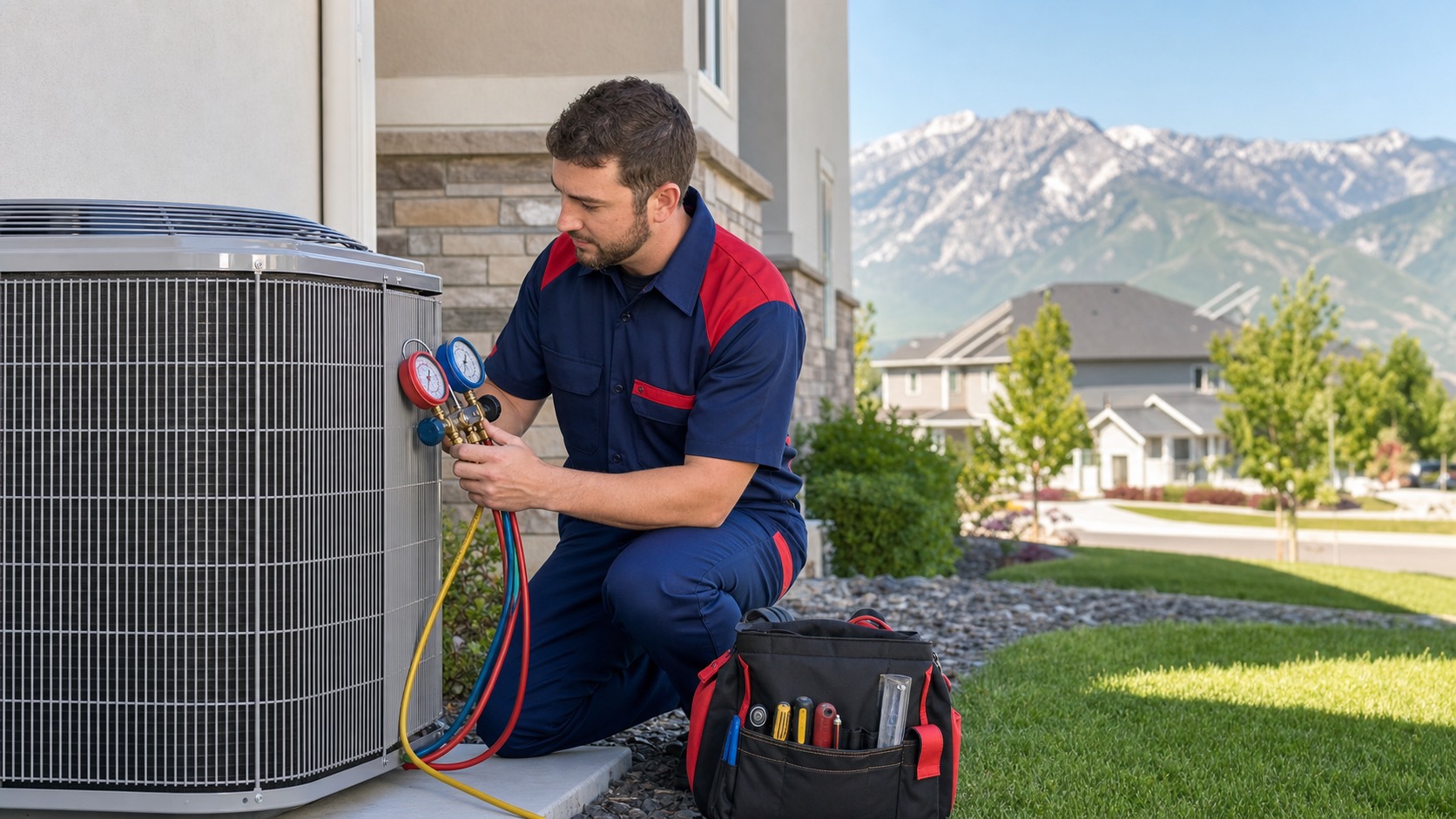
A trained technician follows the evidence. That means listening to what changed, checking the system under operating conditions, measuring performance, and confirming the failed component before recommending a repair. A thorough diagnostic may include:
- Thermostat settings, temperature response, and communication with the equipment.
- Electrical connections, contactors, capacitors, motors, voltage, and amperage.
- Filter condition, return-air restrictions, blower performance, and supply airflow.
- Indoor and outdoor coil condition, drainage, and signs of icing or water problems.
- Refrigerant temperatures and pressures when refrigerant-side testing is appropriate.
- The difference between an isolated failed part and a system-wide performance problem.
That approach is consistent with the items in the ENERGY STAR heating and cooling maintenance checklist, which includes electrical checks, controls, condensate drainage, coil condition, refrigerant level, and blower airflow. The goal is not to replace parts until the system happens to run. It is to identify why it failed and verify that the completed repair restored safe, reliable operation.
Professional Repair Protects You Around Electricity and Refrigerant
Central air conditioners combine high-voltage electrical components, moving parts, pressurized refrigerant, and moisture. Homeowners can safely handle a few basic checks, but opening electrical panels, bypassing safety controls, replacing capacitors, or connecting refrigerant gauges is a different category of work.
Federal refrigerant rules are another important reason to use a qualified company. The U.S. Environmental Protection Agency explains that technicians who service equipment in ways that could release regulated refrigerants must hold Section 608 technician certification. Refrigerant is not a generic fluid that should simply be “topped off.” Low charge can indicate a leak, and different systems require specific refrigerants and service procedures.
A professional technician should know when electrical power needs to be isolated, how to test components without defeating protective controls, and how to recover and handle refrigerant correctly. That protects the technician, your home, the equipment, and the environment.
A Good AC Repair Company Looks Beyond the Failed Part
Replacing a failed component may get the system running, but the better question is why that component failed and whether anything else is stressing the system. For example, poor airflow can contribute to coil icing and long run times. A dirty outdoor coil can make the system work harder. Loose electrical connections can create heat and shorten component life.
ENERGY STAR’s guidance on HVAC quality installation emphasizes proper airflow, refrigerant charge, equipment sizing, and duct performance. Those same fundamentals matter during repair. If a technician restores power but ignores an airflow or charging problem, the system may still be inefficient, uncomfortable, or vulnerable to another failure.
The completed service should include a functional test. You should know what failed, what was repaired, whether the system is cooling normally, and whether the technician found any separate issue that deserves attention now or later.
Professional Advice Helps You Decide: Repair or Replace?
A trustworthy company does not treat every breakdown as a reason to replace the system. Many failures are repairable, especially when the equipment has been maintained, the failed part is available, and the rest of the system is in reasonable condition. At the same time, repeatedly repairing an older system without discussing the larger picture can also waste money.
A responsible repair-versus-replace conversation should consider:
- System age and repair history. One repair is different from repeated breakdowns over several cooling seasons.
- The failed component. A straightforward electrical part is a different decision from a major coil or compressor failure.
- Repair cost relative to remaining value. The cheapest immediate option is not always the lowest long-term cost, but replacement should not be pushed without clear numbers.
- Refrigerant type and availability. Older equipment may use refrigerants that change the economics of a major leak repair.
- Comfort and performance. Persistent hot rooms, excessive run time, or poor airflow may point to issues beyond one failed part.
- Warranty coverage. Parts or labor coverage can materially change the decision.
- Your plans for the home. How long you expect to stay and what comfort improvements matter should be part of the recommendation.
If replacement is genuinely the better option, ask for the reasoning in writing and compare it with the expected repair outcome. Larsen also offers no-pressure second opinions when another company has recommended a costly repair or replacement. You can review air-conditioning installation options without turning every repair call into a sales appointment.
What You Can Safely Check Before Calling
A few homeowner checks can rule out simple problems without opening equipment or touching refrigerant components:
- Confirm that the thermostat is set to COOL and the target temperature is below the current room temperature.
- Replace or inspect the air filter if it is dirty and you can access it safely.
- Make sure supply registers and return grilles are open and not blocked by furniture or rugs.
- Check the electrical panel for a tripped breaker. Reset it only once; if it trips again, leave it off and call for service.
- Look for obvious debris around the outdoor unit, but do not open the cabinet or reach through the grille.
- If you see ice on refrigerant lines or the indoor coil area, turn cooling off and allow the system to thaw rather than forcing it to keep running.
For a more detailed homeowner checklist, read AC Not Cooling in Utah? What to Check Before Calling. Stop troubleshooting and call a professional if you smell burning, hear repeated electrical buzzing, see water near electrical components, experience repeated breaker trips, or cannot restore cooling with basic settings and airflow checks.
How to Choose an AC Repair Company in Utah County
The company you choose should make the decision easier, not more confusing. Before authorizing work, look for clear answers to practical questions:
- Is the company properly licensed and insured for the work it performs?
- Are technicians qualified to handle the electrical and refrigerant work the repair may require?
- Will the technician diagnose the system before recommending parts or replacement?
- Will you receive the repair scope and price before work begins?
- Can the company explain repair and replacement options without pressure?
- Does the company stand behind its work and explain applicable parts or labor coverage?
- Does it have credible local reviews and experience with homes in your service area?
ENERGY STAR’s tips for hiring a heating and cooling contractor also recommend checking licenses and insurance, getting written estimates, asking for references, and making sure the contractor evaluates the home rather than relying on equipment size alone.
Why Local Utah County Experience Helps
An AC repair company that regularly works in Saratoga Springs, Lehi, American Fork, Provo, and surrounding Utah County communities sees the patterns created by local housing, long summer run times, construction dust, landscaping debris, finished basements, and hot upper floors. Local experience does not replace measurement, but it helps the technician know where to look and which questions to ask.
For homeowners in the campaign’s primary service area, Larsen’s Saratoga Springs HVAC service page provides local service information. If the system still operates but has not been inspected recently, a planned HVAC maintenance and tune-up may be more appropriate than waiting for a breakdown.
What to Expect From a Professional AC Repair Visit
A well-run service call should feel organized and understandable. Although every diagnosis is different, the process generally follows the same sequence:
- Listen and confirm the complaint. The technician asks when the problem began, what the system is doing, and whether anything recently changed.
- Inspect and test. The technician evaluates the relevant electrical, airflow, mechanical, drainage, and refrigerant-side components.
- Explain the diagnosis. You receive a plain-language description of what failed and why the recommended work addresses it.
- Present pricing before repair. You decide whether to proceed after seeing the scope and price.
- Complete and verify the work. After the repair, the system is operated and checked to confirm that it is cooling and cycling correctly.
- Discuss next steps. The technician explains any maintenance need or separate concern without turning it into an emergency if it is not one.
You should never feel embarrassed for asking to see the failed part, requesting measurements, or asking why a repair is recommended. A professional company should be able to explain the work without hiding behind jargon.
Get the Right AC Repair—Not a Guess
The value of a professional AC repair company is confidence: confidence that the problem was diagnosed, that electrical and refrigerant work was handled correctly, that pricing was explained before the repair, and that replacement was recommended only when the evidence supported it.
If your AC is not keeping up in Saratoga Springs or Utah County, schedule AC repair with Larsen Heating & Air. We provide fast scheduling, upfront pricing, repair-first guidance, and second opinions for homeowners who want a clear answer before making a major decision.